
TREATMENT OVERVIEW
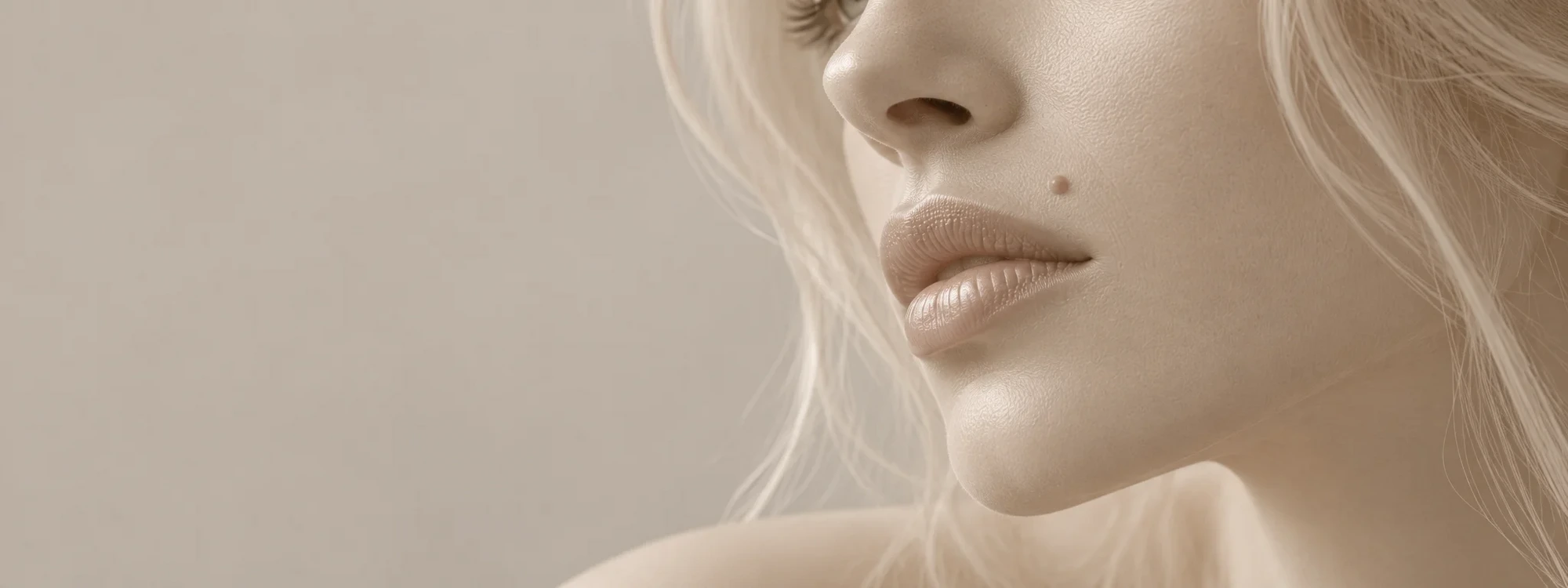
Facial lesion & mole excision
Assessment and surgical removal of selected benign or suspicious facial lesions. The technique is planned to remove the lesion safely while considering scar placement and surrounding facial structures. Any need for histology will be explained.
SYMPTOMS & SIGNS
When to seek an assessment
- A facial mole or lump causing concern
- A lesion that catches, becomes irritated or changes
- Advice about removal and the resulting scar
WHAT TO EXPECT
Your consultation
Assessment considers the lesion’s history, appearance and position, including nearby facial structures. A changing or suspicious lesion needs diagnostic assessment; removal for appearance alone should not be assumed to be the appropriate route.
Treatment options
Options may include observation, removal or referral for specialist assessment. If excision is advised, the discussion covers the incision, closure and whether tissue should be examined in a laboratory.
AFTERCARE
Risks, recovery and follow-up
Removal leaves a scar. Bleeding, infection and wound-healing problems are possible, and further treatment may depend on the diagnosis. Dressing care and any stitch removal should follow the individual plan.
PATIENT QUESTIONS
Frequently asked questions
No. The diagnosis and safety of removal come first, particularly if the lesion has changed.
The need for laboratory examination will be explained as part of the treatment plan.

GET IN TOUCH
Ready to take the next step?
A consultation is the best place to discuss your concerns, what may be achievable and whether treatment is appropriate. There is no obligation to proceed with surgery.