Aesthetic rhinoplasty
For patients considering a change to nasal shape, size, projection, profile, tip or symmetry.
TREATMENT OVERVIEW
The nose is central to facial identity and essential to breathing. Even a small change can affect facial balance, while a change made without respect for nasal structure may affect function over time. That’s why rhinoplasty requires detailed assessment, careful planning and an approach tailored to the individual.
Mr Randhawa’s background in both ENT and facial plastic surgery enables him to assess the nose from the inside and outside. Treatment may be aesthetic, functional, reconstructive or a combination of all three.

TREATMENT OPTIONS
For patients considering a change to nasal shape, size, projection, profile, tip or symmetry.
For subtle contour refinement using dermal fillers, without surgery.
For structural problems that affect breathing.
For concerns after previous nasal surgery.
For deformity related to trauma, disease, congenital difference or previous surgery.
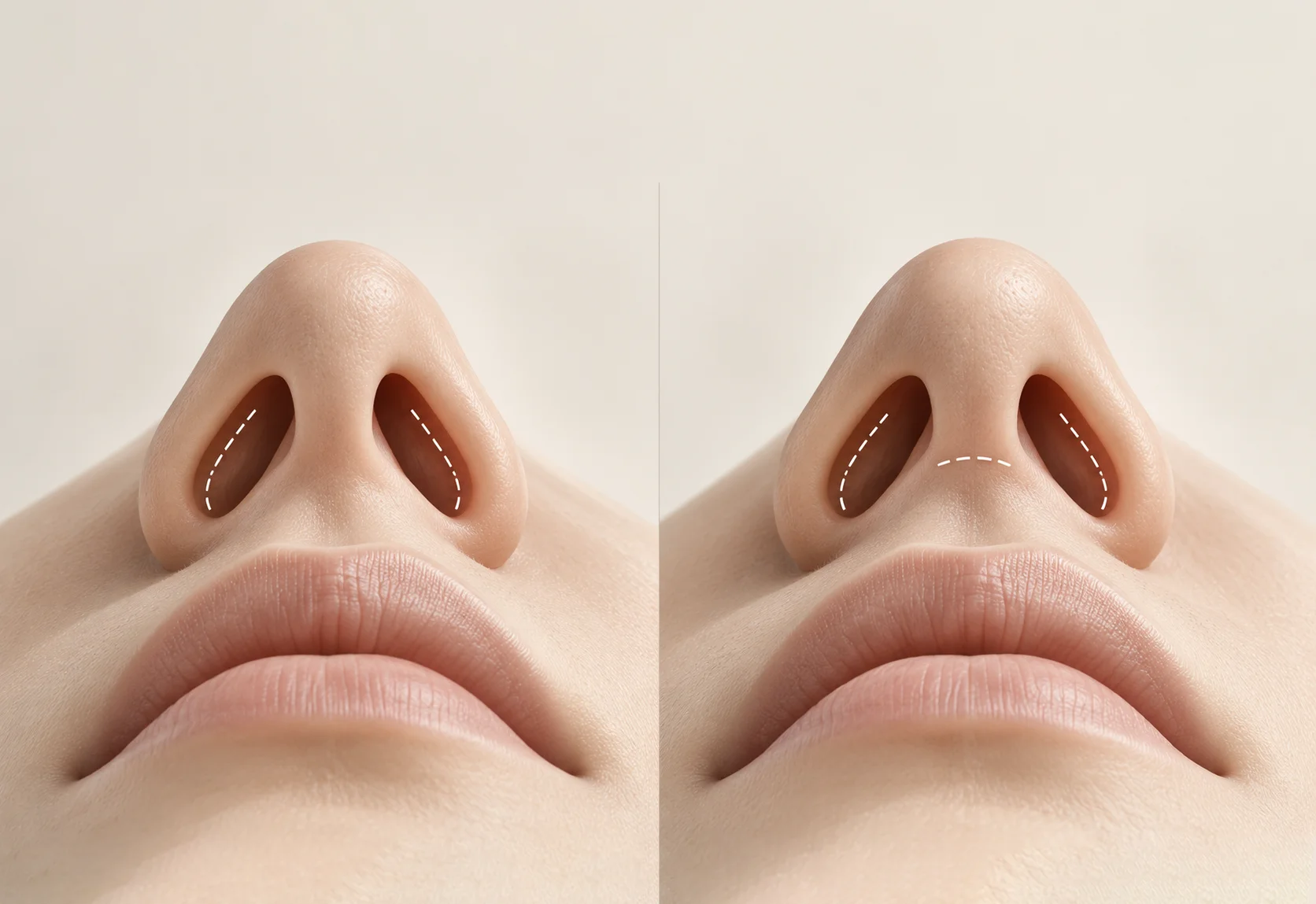
SURGICAL APPROACH
These terms describe how your surgeon accesses your nasal framework. A closed approach uses incisions inside the nostrils. An open approach also uses a small incision across the columella, allowing wider exposure of the underlying structures. Neither is automatically “better”. The appropriate approach depends on the anatomy, goals and complexity of the operation.
REALISTIC EXPECTATIONS
Rhinoplasty may improve proportion, symmetry, profile or breathing, but surgery cannot create perfect symmetry or guarantee a precise photographic result. Skin thickness, cartilage strength, healing, scar formation and existing anatomy all influence the outcome. These factors are discussed carefully during consultation.
GET IN TOUCH
A consultation is the best place to discuss your concerns, what may be achievable and whether treatment is appropriate. There is no obligation to proceed with surgery.